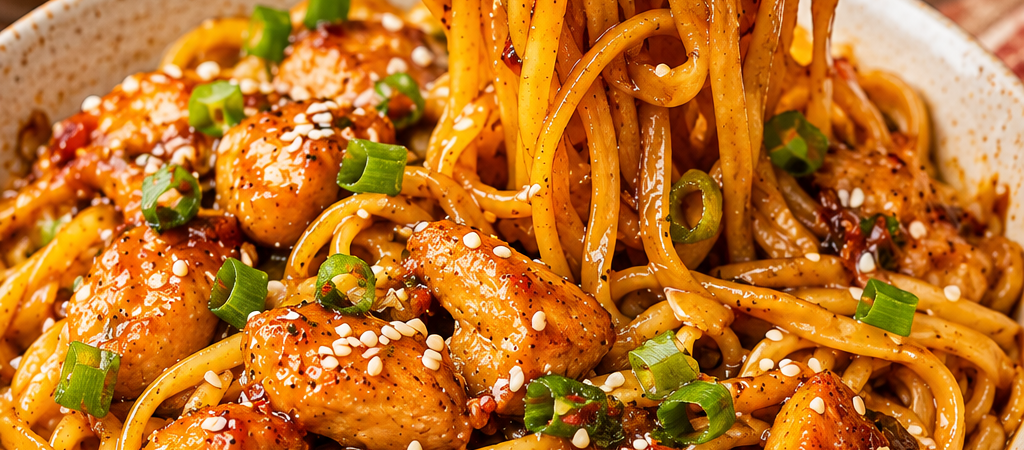
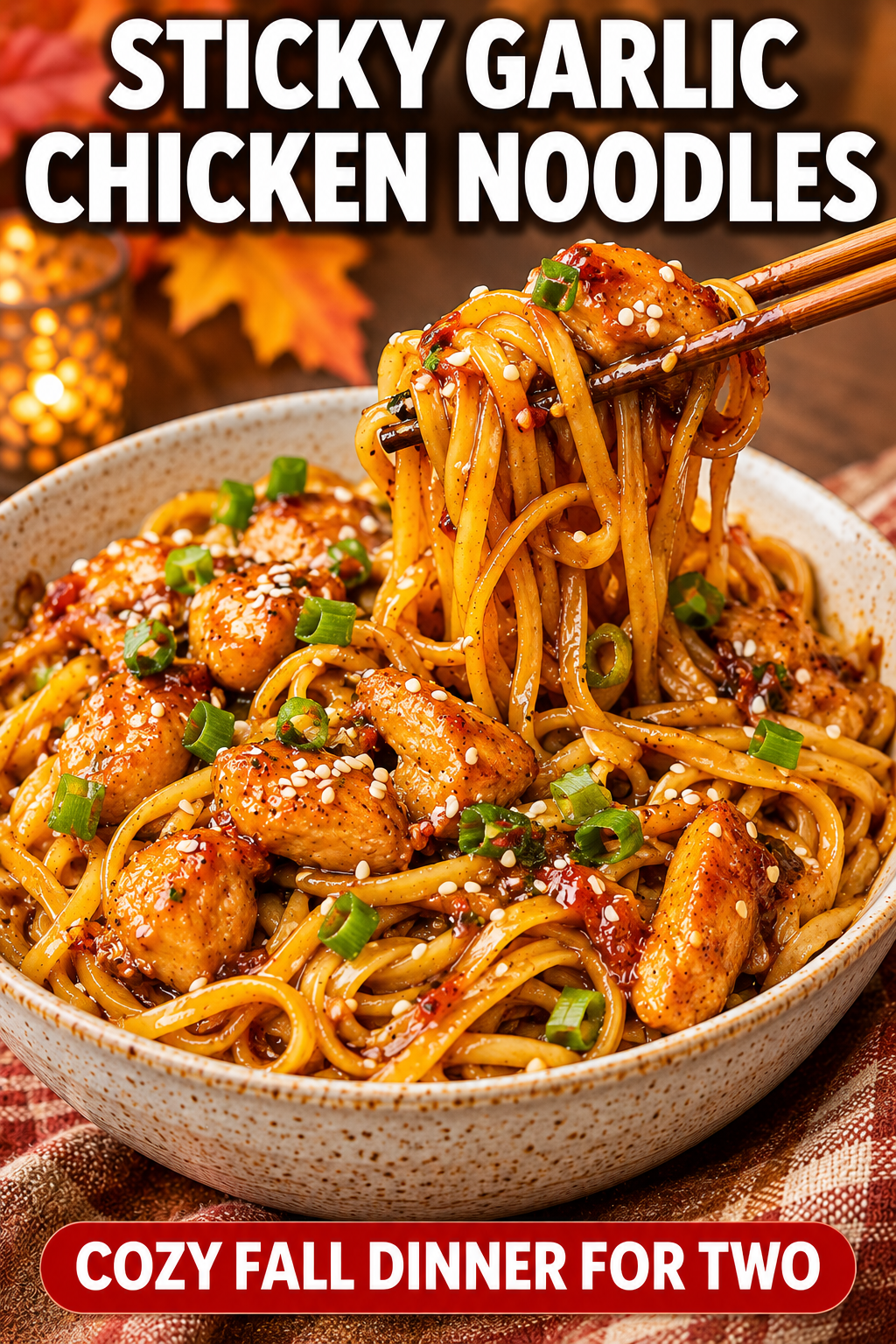
Sticky Garlic Chicken Noodles — a cozy fall dinner for two: chewy noodles and crisp-edged chicken pieces glossed in a sticky honey-soy garlic sauce, showered with sesame seeds and green onions, exactly as the pin serves it. (The pin shows the finished bowl without a printed ingredient list, so this is the complete standard recipe for exactly the dish in the photo.) Every step below comes with its own photo.
Cozy Fall Dinner
One Wok
Serves 2
Ingredients
- 8 oz noodles (udon, lo mein or ramen)
- 1 lb boneless chicken breast or thighs, cut in bite-size pieces
- 2 tbsp cornstarch
- Salt and black pepper, to taste
- 2 tbsp neutral oil
- 6 garlic cloves, minced
- 1/3 cup low-sodium soy sauce
- 3 tbsp honey (or brown sugar)
- 1 tbsp rice vinegar
- 1-2 tsp sriracha or chili crisp, to taste
- 1 tsp toasted sesame oil
- 1/2 tsp grated fresh ginger (optional)
- 1 tsp sesame seeds, plus more to serve
- 3 green onions, sliced, plus more to serve
Step by Step
Cook the Noodles
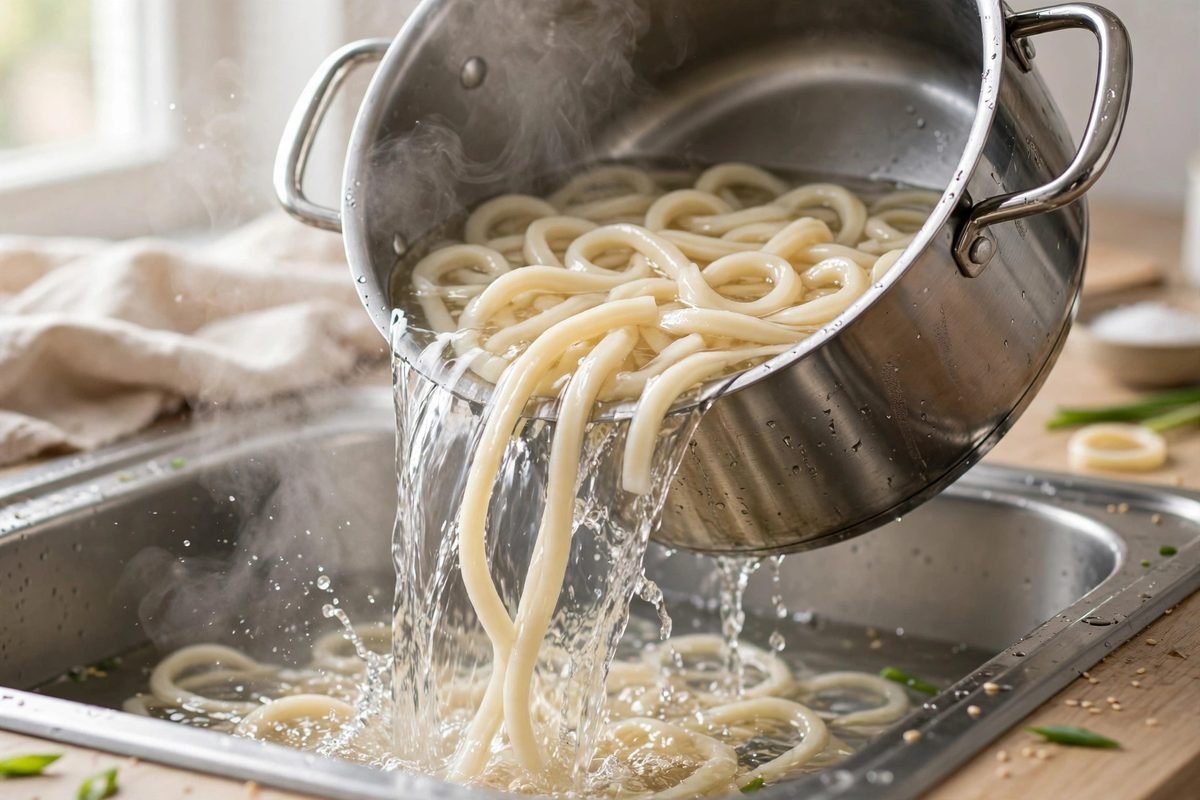
Boil the noodles in well-salted water until just shy of done — about 1 minute less than the package says — because they will finish in the hot sauce and absorb some of it. Before draining, scoop out 1/2 cup of the starchy cooking water and set it aside; that liquid is your sauce insurance for later. Drain the noodles and rinse briefly under warm water (or toss with a few drops of sesame oil) so they do not glue themselves into a single noodle brick while the chicken cooks. Thick udon, like the ones being lifted in the photo, are the coziest choice here, but lo mein or even ramen bricks work beautifully.
Whisk the Sticky Sauce

Whisk the soy sauce, honey, rice vinegar, sriracha, sesame oil and ginger together in a small bowl until the honey dissolves completely. This sauce is the entire flavor architecture of the dish — salty soy, floral honey, a quiet acid lift from the vinegar, building heat — and it must be ready before anything hits the pan, because once the wok is hot there is no time to measure honey with a chicken fire in progress. Taste it: you want the honey present but not candy-sweet, since it will concentrate as it reduces and turns sticky.
Crisp the Chicken
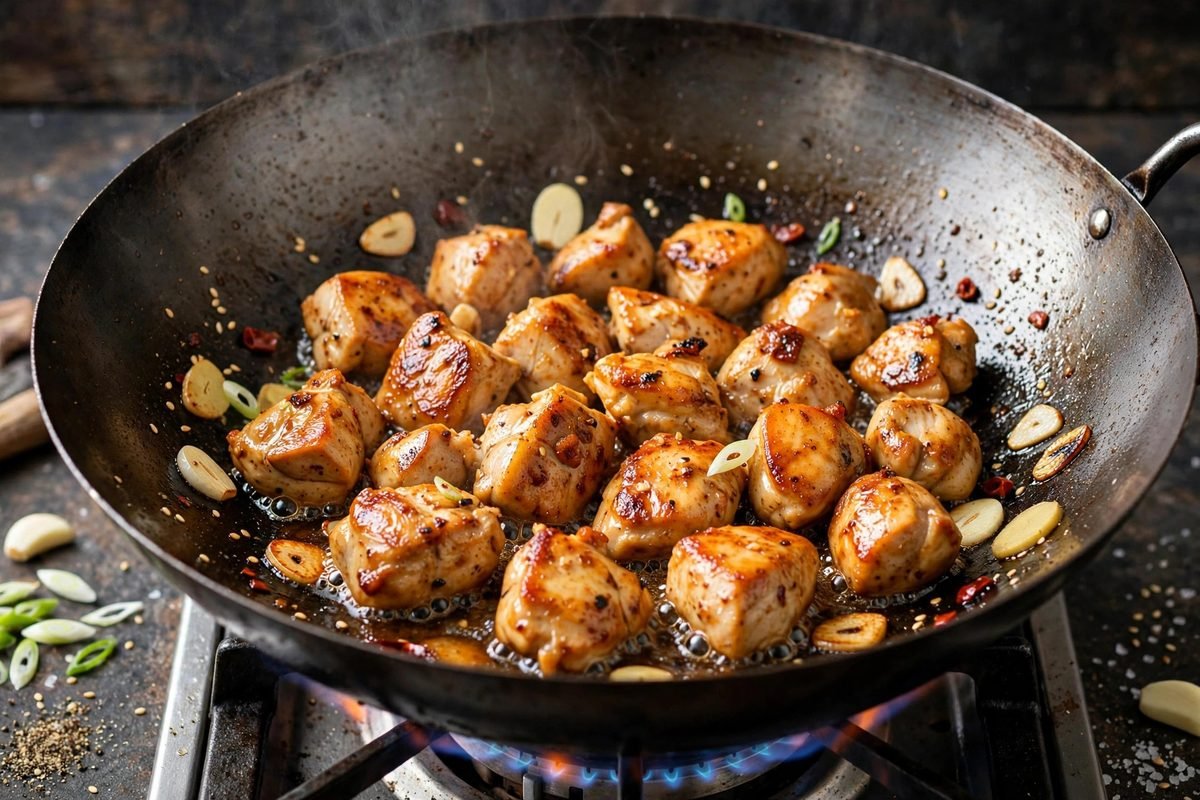
Toss the chicken pieces with the cornstarch, salt and pepper until every piece wears a thin, dry coat — this is the trick behind the photo’s glossy, sauce-clinging chicken, because the starch crisps into a delicate crust that grabs the glaze. Heat the oil in a wok or large skillet over high heat until it shimmers, add the chicken in a single layer, and let it sit undisturbed for 2-3 minutes before turning; cook 5-6 minutes total until deeply golden with caramelized edges and cooked through. Crowding the pan steams the chicken pale and soft, so work in two batches if your pan is small — crisp edges are not negotiable in a dish called ‘sticky.’
Bloom the Garlic

Turn the heat down to medium and add all the garlic to the chicken, stirring for just 30-45 seconds until it is intensely fragrant. Six cloves is the point of a dish with garlic in its name, and this brief bloom in the hot oil is what spreads that flavor through every noodle instead of leaving raw, harsh bites. Watch it like a hawk: garlic goes from golden and sweet to bitter and burnt in under a minute, and there is no recovering burnt garlic — if it starts coloring too fast, pull the pan off the heat and move straight to the next step.
Glaze Everything

Pour the sauce over the chicken and let it bubble for 1-2 minutes, stirring, until it thickens to a syrup that clings in shining strands — the cornstarch on the chicken helps it along, and the honey caramelizes into that deep amber gloss in the photo. Add the drained noodles and toss vigorously with tongs for 1-2 minutes until every strand is coated and glistening, loosening with splashes of the reserved noodle water whenever the tangle gets too tight or the sauce too thick. Stir in the sesame seeds and green onions at the very end so they stay bright and crunchy rather than wilting into the heat.
Serve for Two
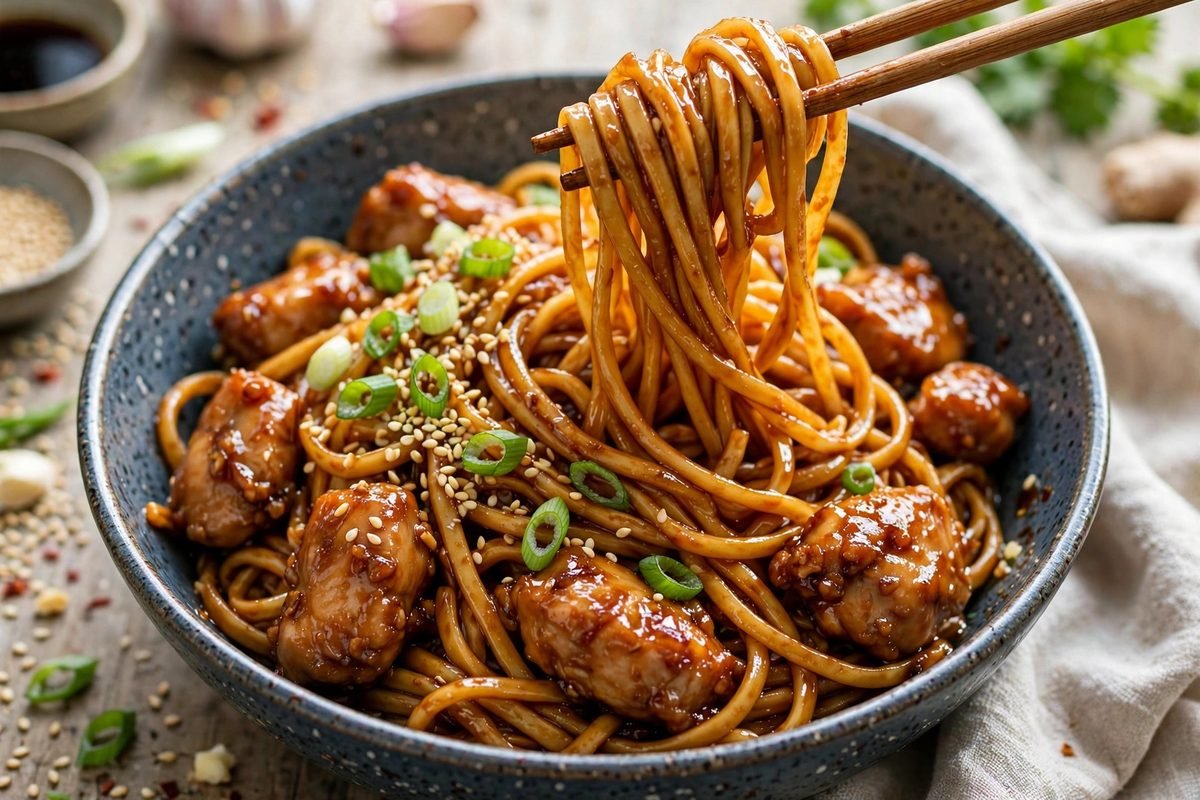
Divide between two warm bowls, giving each a generous share of chicken on top, and finish with extra sesame seeds, more sliced green onion and a drizzle of chili crisp if your household runs hot. Serve immediately with chopsticks — the twirl in the photo is not food styling, it is genuinely the best way to eat long noodles — while the glaze is still sticky and shining. It will firm up as it sits (the sauce sets as it cools), so this is a cook-it-and-eat-it dinner, eaten close together, which is precisely what ‘cozy fall dinner for two’ is supposed to mean.
Pro Tips
- Cornstarch is the crisp-and-gloss trick — the thin starchy coat crisps in the wok and then thickens the sauce as it glazes, doing two jobs with one spoonful.
- Undercook the noodles on purpose — one minute shy in the pot, and they finish perfectly in the sauce instead of going soft while they wait.
- Save the noodle water — its starch loosens a too-thick glaze while keeping it shiny. Plain water just thins it.
- Garlic last and brief — 30-45 seconds of blooming. Burnt garlic cannot be fixed, only started over.
- Double it cleanly — for four people, double everything but cook the chicken in two batches and keep the same sauce-toss order; a crowded wok is the only way this dish fails.
Frequently Asked Questions
Which noodles are best?
Thick udon are the coziest and closest to the photo — chewy, sauce-hugging strands. Lo mein noodles are the takeout-style classic, and two bricks of instant ramen (seasoning packets discarded) are the weeknight hero. Even spaghetti works in a pinch; cook it very al dente and give it an extra minute in the sauce.
How do I control the heat?
The sriracha or chili crisp sets the level: 1 tsp is a gentle warmth, 2 tsp is a proper kick, and a chili-crisp drizzle at the table lets two people eat two different heat levels from the same pan. Omit it entirely and the dish is sweet-garlic mild — still excellent, and kid-friendly.
Can I add vegetables?
Absolutely — bell pepper strips, snap peas, shredded carrot, bok choy or broccoli florets all belong here. Stir-fry firmer vegetables for 2-3 minutes after the chicken comes out (or alongside it), and leafy ones go in with the noodles. Keep the total additions modest so the pan stays hot and the sauce stays sticky rather than watery.
Can I make it gluten-free?
Yes: use tamari instead of soy sauce, rice noodles or gluten-free ramen instead of wheat noodles, and check your sriracha label. Everything else in the recipe is naturally gluten-free, including the cornstarch coating.
What about leftovers?
Honestly, this one is best fresh — the glaze sets and the noodles drink the sauce as they sit. If you do have leftovers, they keep 2 days in the fridge and reheat best in a hot skillet with a splash of water, tossing until the glaze turns glossy again. Microwaving works, but the noodles will be softer.