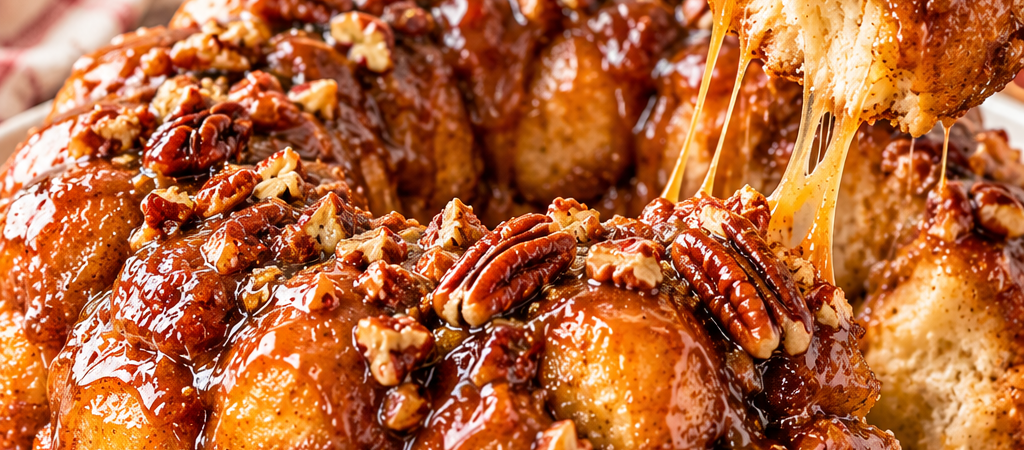
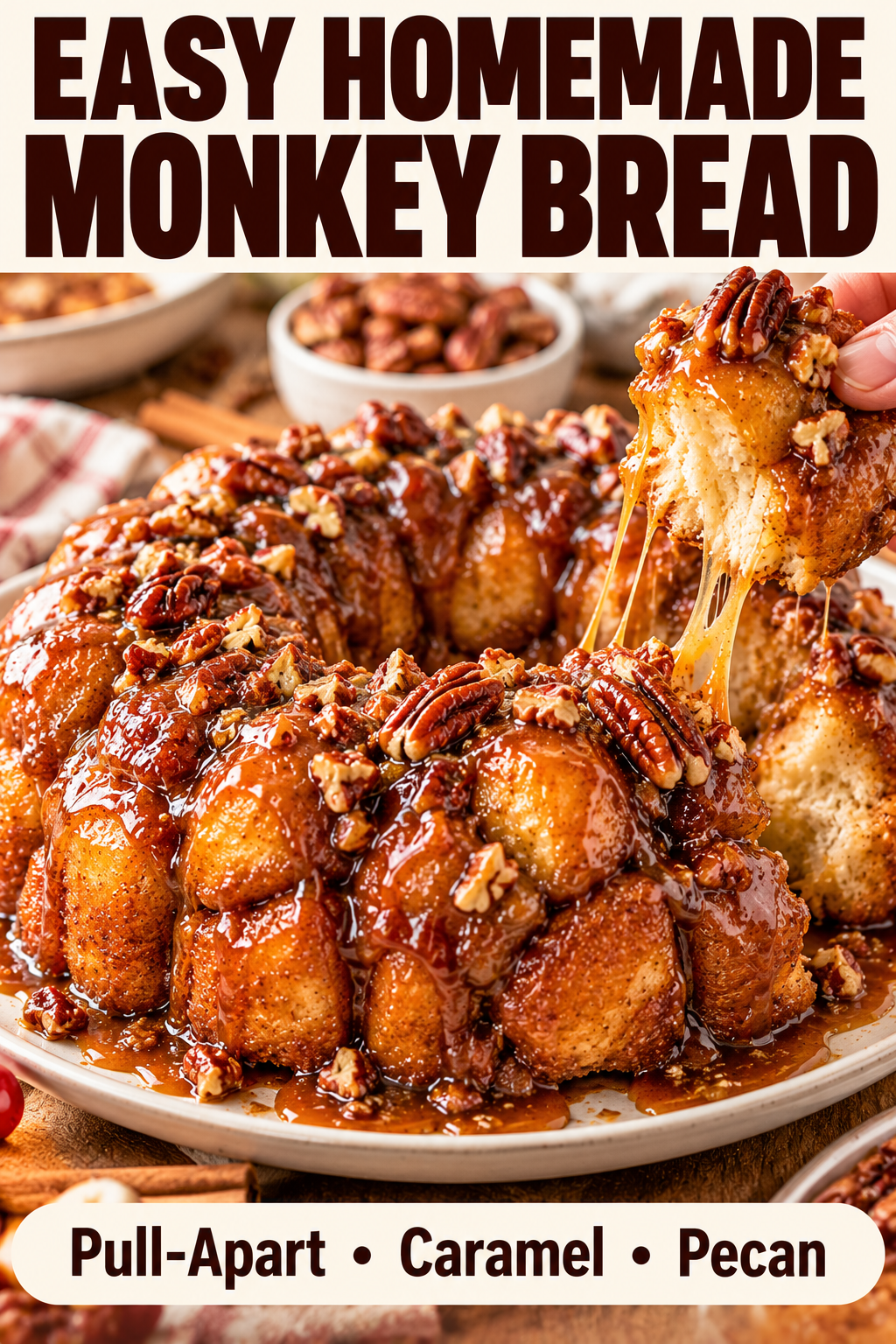
Easy Homemade Monkey Bread — pull-apart, caramel, pecan: cinnamon-sugar biscuit pieces baked in a Bundt pan under a dark, gooey brown-sugar caramel, crowned with pecans, just like the pin’s glorious ring. (The pin shows the finished bread without a printed ingredient list, so this is the complete standard recipe for exactly the bread in the photo.) Every step below comes with its own photo.
Bake 350°F · 35-40 min
Gooey Caramel
Serves 10-12
Ingredients
- 2 cans (16.3 oz each) refrigerated biscuit dough (16 biscuits)
- 1 cup granulated sugar
- 2 tsp ground cinnamon
- 1 cup chopped pecans, divided (plus a few halves, to finish)
- 3/4 cup unsalted butter (1 1/2 sticks)
- 1 cup brown sugar, packed
- 1 tsp vanilla extract
- 1/4 tsp salt
Step by Step
Cut the Biscuits
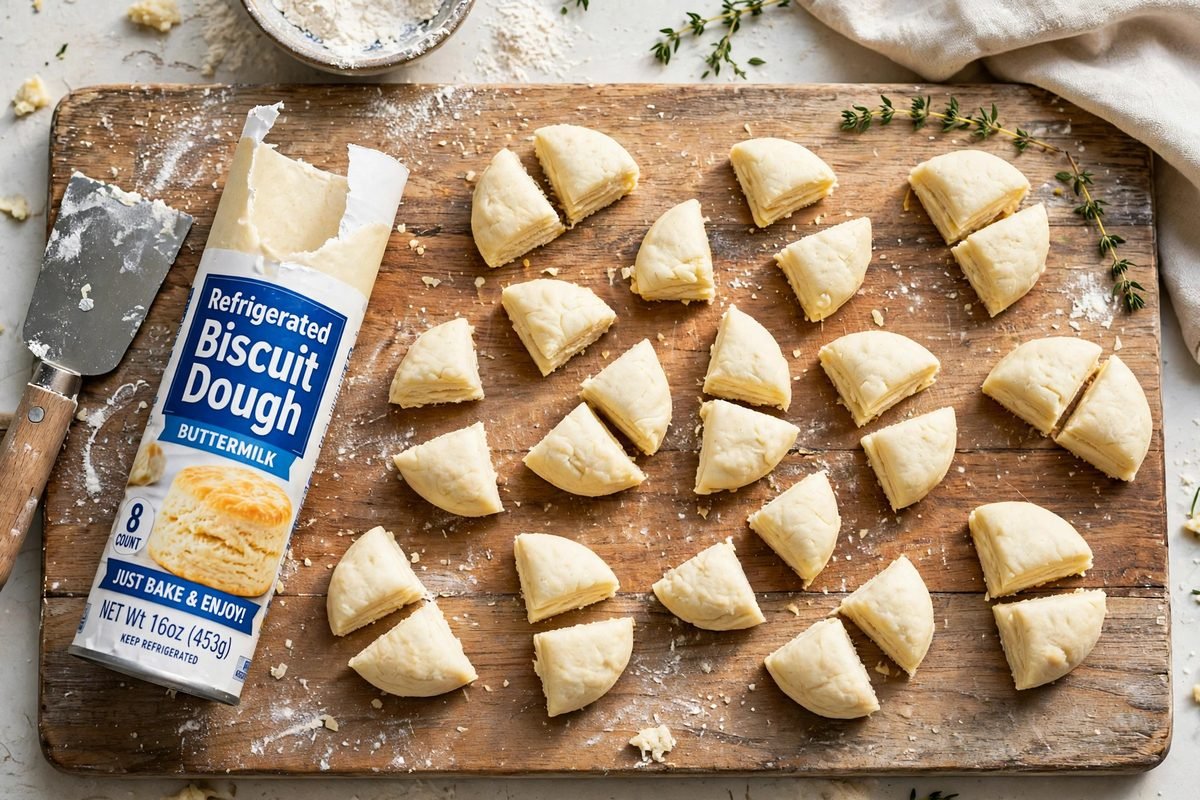
Cut each biscuit into quarters with kitchen scissors or a sharp knife — 64 little pieces in total. Even sizing is the quiet secret of monkey bread: pieces of the same size bake at the same speed, so you do not end up with the classic heartbreak of burnt edges around a raw, doughy center. Keep the pieces loose and unstacked as you work; biscuit dough loves to re-stick to itself, and a light dusting of the cinnamon sugar from the next step stops the pile from fusing back into one lump.
Coat in Cinnamon Sugar
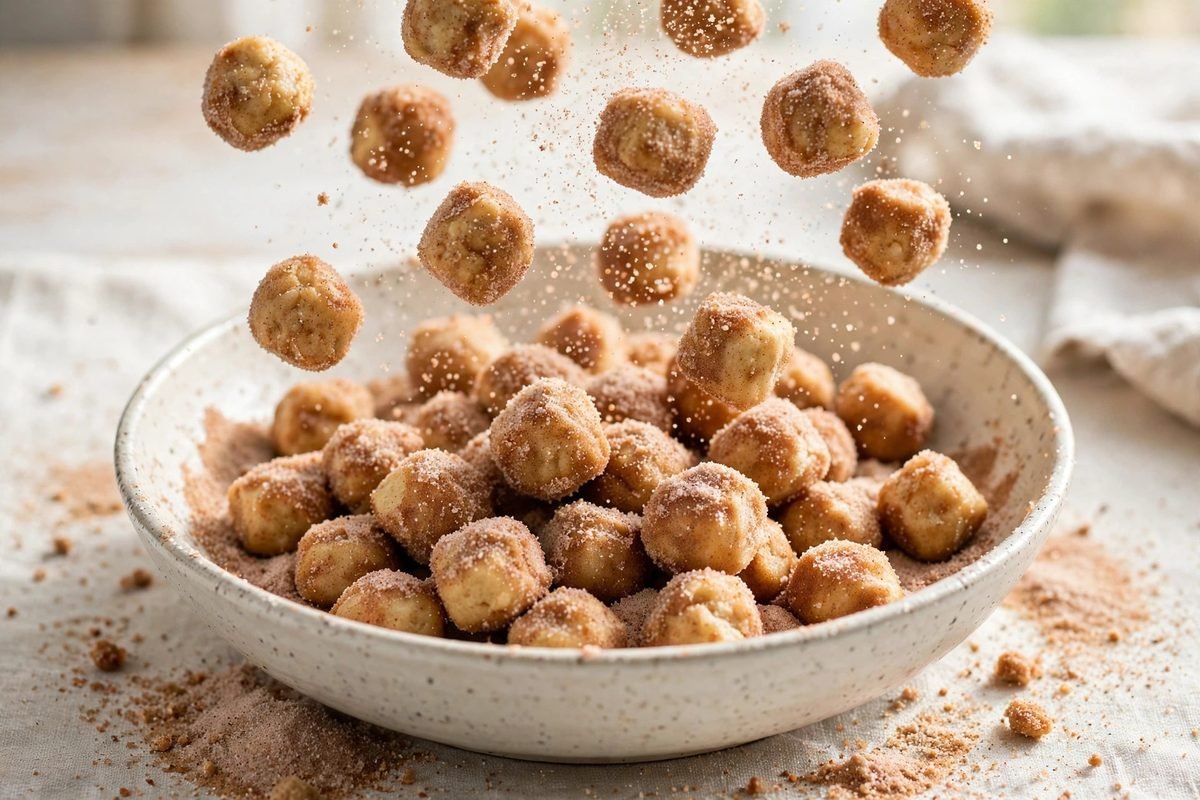
Toss the granulated sugar and cinnamon together in a large zip bag or a wide bowl, then coat the dough pieces in batches, shaking or tumbling until every surface is covered. A bag genuinely works better than a bowl here — the pieces tumble freely and come out evenly spiced instead of bald on one side. Do not shake off the excess too zealously; the loose sugar in the crevices is what caramelizes between the pieces and glues the ring together in the oven.
Layer in the Bundt Pan
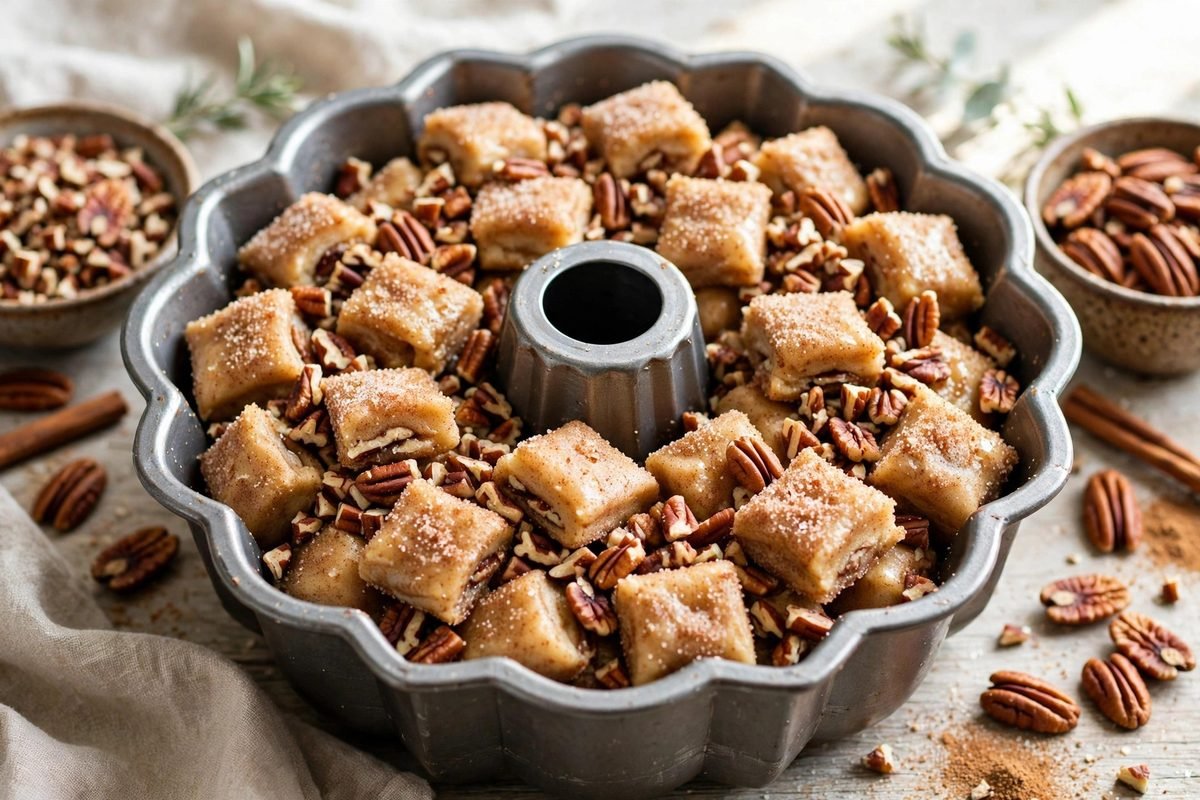
Grease a 10-12 cup Bundt pan very generously — every ridge, including the center tube — because caramel is basically edible cement and an under-greased pan will keep half your bread as a hostage. Scatter a third of the pecans in the bottom (which becomes the top), add half the coated pieces, scatter more pecans, then the rest of the pieces and the last of the pecans. Layering the nuts through the bread, not just on it, is how the pin’s ring ends up with pecans in every pull, top to bottom.
Make the Caramel Sauce
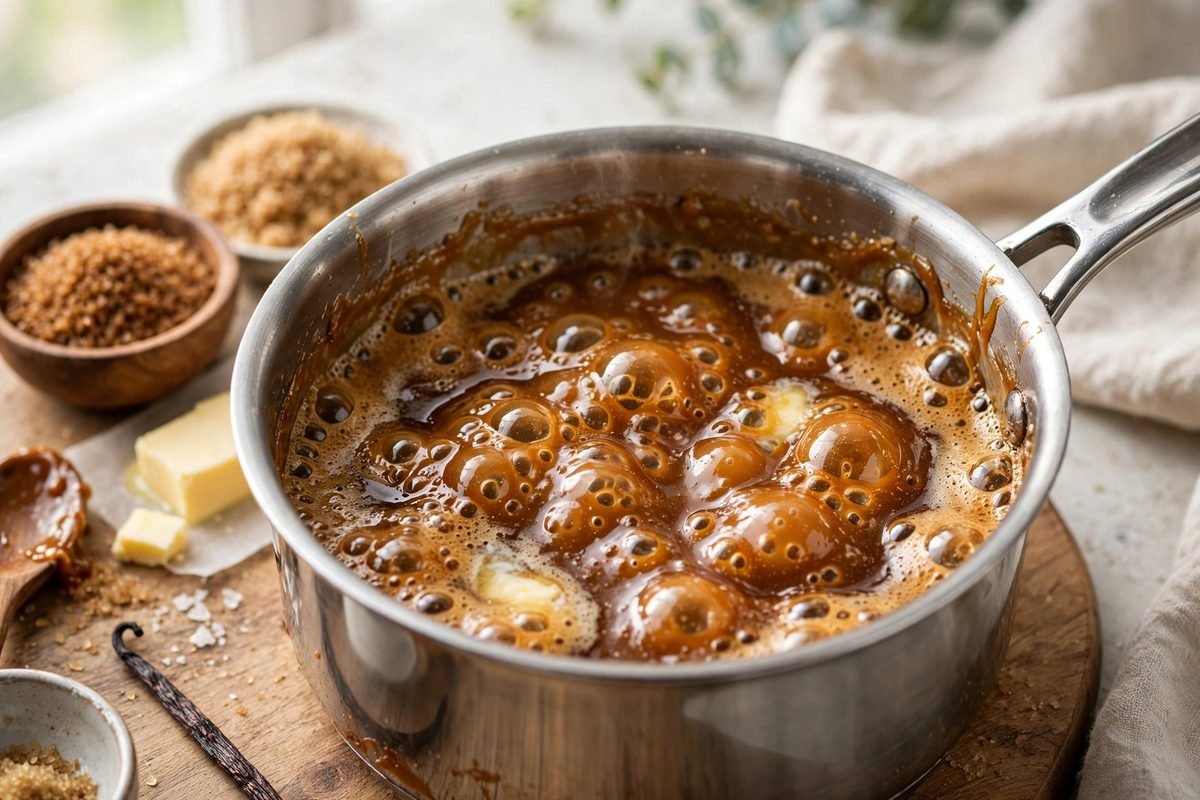
Melt the butter in a small saucepan over medium heat, stir in the brown sugar and salt, and bring the mixture to a full, foaming boil for exactly 1 minute, stirring constantly. Take it off the heat and stir in the vanilla. That 1-minute boil matters: it fully dissolves the sugar so the sauce sets glossy and smooth like the photo’s dark glaze, instead of crystallizing into grit on the finished bread. It will look thin — that is right. It thickens as it bakes into the dough and again as it cools.
Pour & Bake
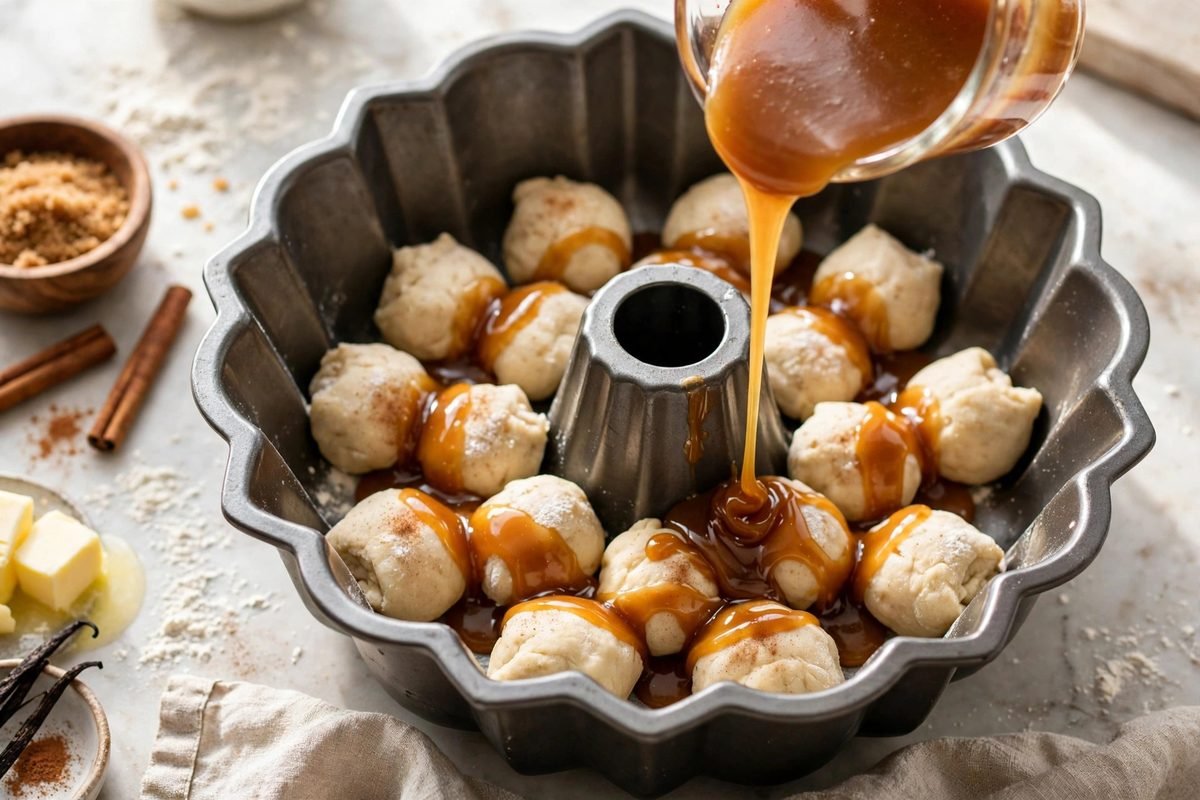
Pour the hot caramel slowly and evenly over the layered dough, letting it seep down between the pieces rather than pooling in one spot. Bake at 350°F (175°C) for 35-40 minutes, until the ring is deep golden brown — the exact mahogany tone in the photo — puffed, and bubbling at the edges, with no pale, wet-looking dough visible between the pieces in the center. If the top browns much faster than the center cooks, tent it loosely with foil for the last 10 minutes. Underbaked monkey bread is doughy in the middle; an extra 3 minutes is cheap insurance.
Rest, Flip & Serve
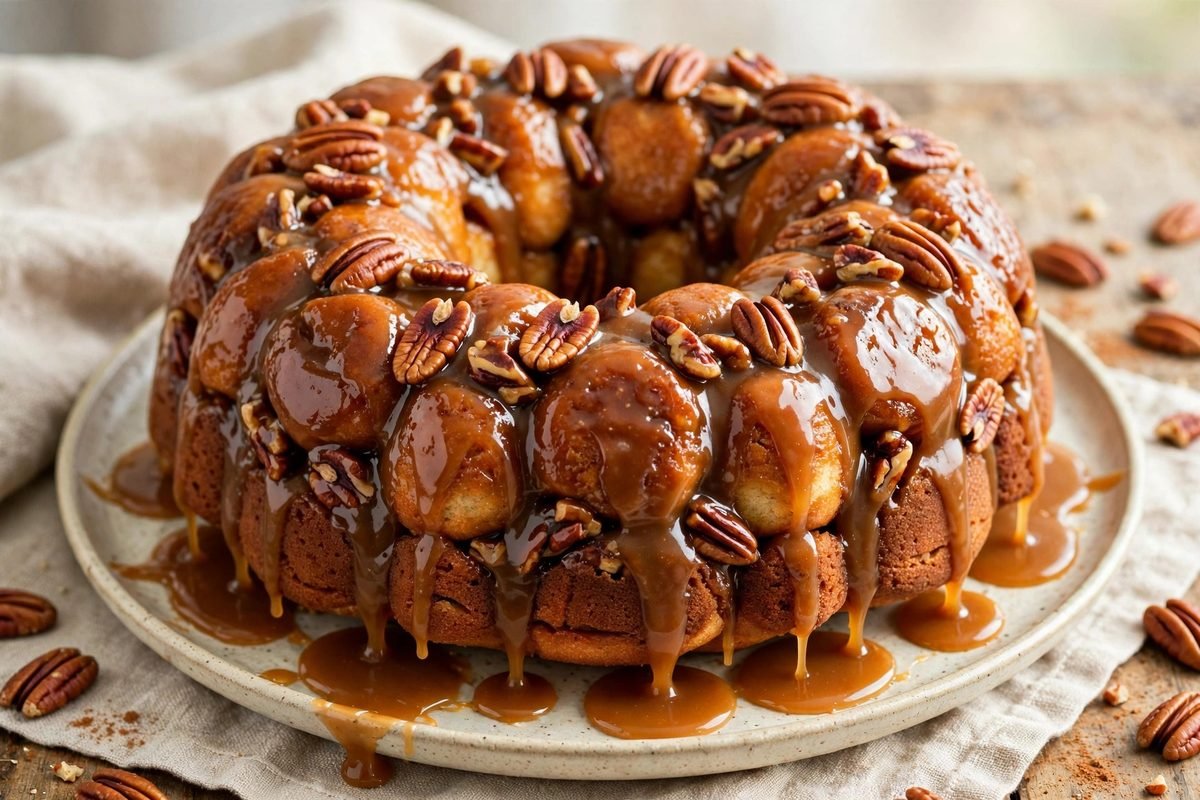
Rest the pan on a rack for just 5-10 minutes — long enough for the caramel to stop being lava, short enough that it has not yet set and glued the bread in. Then place a large plate over the pan and, with confidence and oven mitts, flip them together in one motion. Lift the pan away slowly: the caramel cascades down the ring and the pecans that went in first now crown the top, exactly like the pin. If any pieces or nuts stay behind, just scoop and patch them back on with the spoon — nobody will ever know. Serve warm, in the middle of the table, and let everyone pull. That caramel stretch in the photo is your reward for serving it in the first half hour.
Pro Tips
- Grease like you mean it — caramel is glue. Baking spray with flour, in every ridge and up the center tube, is the difference between a clean flip and a rescue operation.
- The 1-minute boil is non-negotiable — it dissolves the brown sugar completely. Skimp it and the sauce turns grainy as it cools.
- Even pieces, even bake — quarters, all of them. One giant chunk in the middle is a raw center waiting to happen.
- Nuts through the layers — pecans only on top means half the servings miss them. Layer them in, as the recipe does.
- Serve it warm or reheat it — monkey bread is a warm food. Ten minutes at 300°F brings leftover rings back to pull-apart gooey.
Frequently Asked Questions
Can I use homemade dough instead of canned biscuits?
Yes — a basic sweet yeast dough or pizza dough works: about 1 1/2 lbs of dough, cut into walnut-sized pieces. Homemade dough needs a 20-30 minute rise in the pan before baking, which the canned version skips. The canned biscuits are the ‘easy homemade’ classic for a reason, but from-scratch is genuinely lovely.
Why is the center doughy?
Usually underbaking or oversized pieces. The center of a Bundt ring is the last place to cook; look for a deep mahogany color and no pale wet dough between pieces at the center before flipping. A few extra minutes, tented with foil, fixes it without burning the top.
Can I make it the night before?
Yes — assemble everything in the pan (sauce poured over included), cover tightly and refrigerate overnight. In the morning let it sit out 30 minutes while the oven heats, then bake as directed, adding about 5 minutes. Christmas-morning bakers have sworn by this for decades.
I don’t have a Bundt pan — what else works?
A tube pan is the direct swap. A 9×13-inch dish makes a pull-apart slab instead of a ring — same recipe, about 5 minutes less baking, and no flip needed (serve it right side up, caramel spooned back over). Two loaf pans also work.
How do leftovers keep?
Covered at room temperature for a day, or refrigerated up to 4 days. Reheat portions in the microwave for 15-20 seconds or the whole ring at 300°F for 10 minutes — the caramel loosens right back up. It does not freeze gracefully once sauced; freeze before the flip if you must, without the final rest.