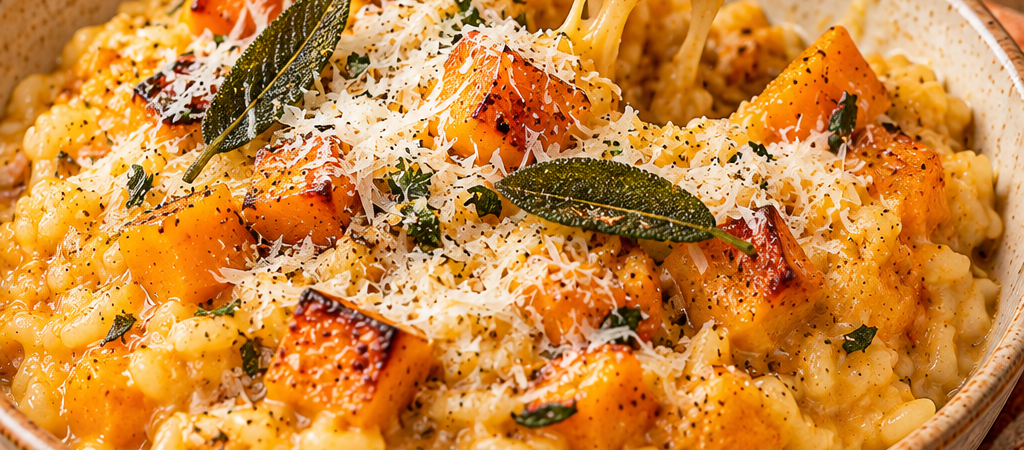

Creamy Roasted Butternut Risotto — comfort in every spoon: silky, golden risotto studded with caramelized roasted butternut squash, finished with butter, Parmesan and crispy sage leaves, exactly as the pin serves it. (The pin shows the finished bowl without a printed ingredient list, so this is the complete standard recipe for exactly the dish in the photo.) Every step below comes with its own photo.
Comfort in Every Spoon
No Cream Needed
Serves 4-6
Ingredients
- 1 medium butternut squash (about 2 lbs), peeled and cubed
- 3 tbsp olive oil, divided
- Salt and black pepper, to taste
- 1/4 tsp ground nutmeg
- 5-6 cups chicken or vegetable broth, kept warm
- 3 tbsp butter, divided
- 1 small onion or 2 shallots, finely diced
- 2 garlic cloves, minced
- 1 1/2 cups arborio rice
- 1/2 cup dry white wine (or extra broth)
- 3/4 cup freshly grated Parmesan, plus more to serve
- 10-12 fresh sage leaves
Step by Step
Roast the Butternut

Toss the squash cubes with 2 tbsp olive oil, salt, pepper and the nutmeg, spread them on a parchment-lined tray in a single layer with space between the pieces, and roast at 425°F (220°C) for 25-30 minutes until tender with deep caramelized edges — the dark, almost-toasty corners in the pin’s photo. Crowding is the enemy: piled-up cubes steam and stay pale. Roasting first, instead of simmering the squash in the risotto, is what concentrates its sweetness and gives the finished dish two textures — cubes that hold their shape and edges that melt into the rice.
Toast the Rice
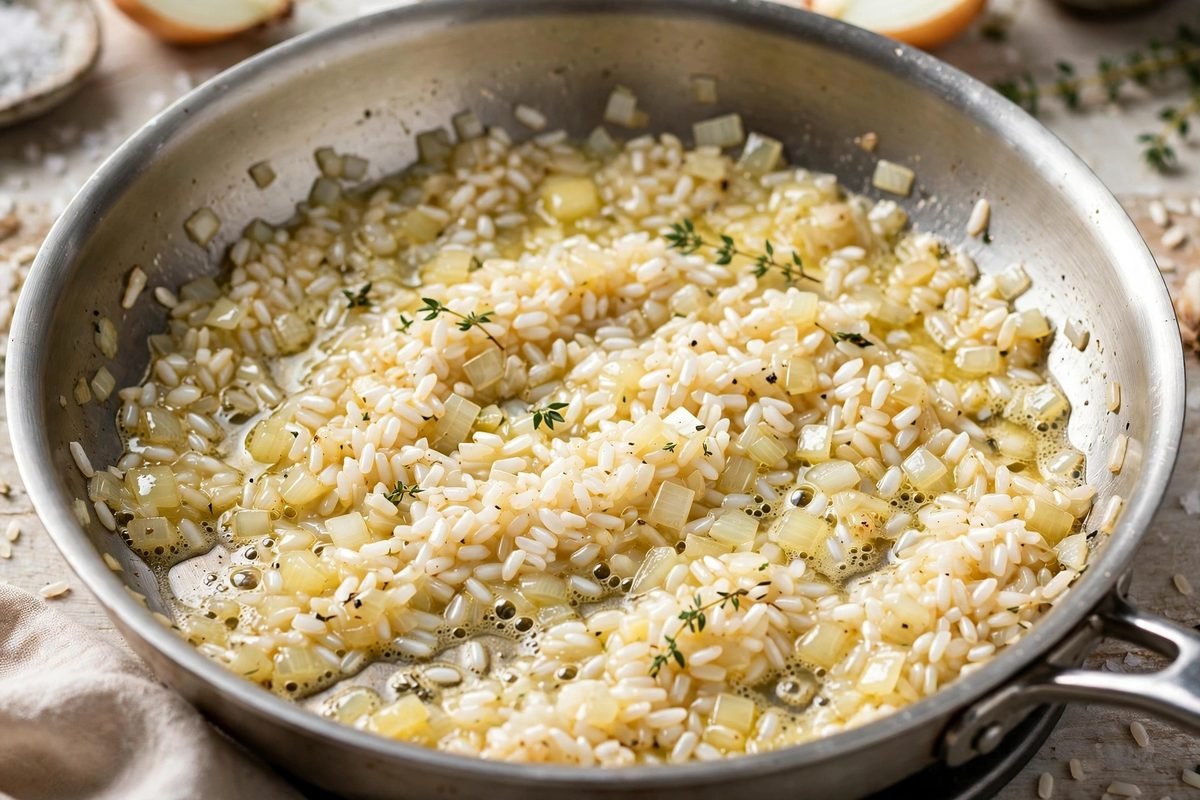
While the squash roasts, melt 2 tbsp butter with the remaining 1 tbsp olive oil in a wide, heavy pan over medium heat and soften the onion for 4-5 minutes until translucent. Add the garlic for 30 seconds, then the arborio rice, and stir for 2 minutes until every grain is glossy and translucent at the edges with a white dot in the center — this is the tostatura, and it keeps the grains distinct and firm-hearted instead of bloating into porridge. Put the broth on to warm in a separate pot now; it must be hot when it meets the rice, or each cold ladle will stall the cooking.
Deglaze with Wine

Pour in the wine and stir, scraping the pan, until it has almost completely evaporated and the sharp alcohol smell has cooked away, about 2 minutes. What remains is a bright acidity underneath all the coming richness — risotto without it tastes flat and heavy by the third spoonful. No wine in the house or the kitchen? Extra broth plus a squeeze of lemon juice at the very end does the same job. This is the last quiet moment of the recipe; from here, you and the spoon are on duty.
Ladle the Broth, Slowly

Add the warm broth one ladle at a time, stirring often — not constantly, despite what the legends say — and letting each addition be mostly absorbed before the next goes in. Keep the risotto at a steady, lazy simmer for 18-20 minutes in total. The stirring (and the wide pan) coaxes the starch out of the grains, and that starch is the cream in ‘creamy risotto’ — there is no cream in this pot at all. Start tasting at 16 minutes: the rice is done when each grain is tender with a slight firm core, al dente, and the whole pan moves like slow lava when you shake it.
Finish with Squash & Parmesan

Take the pan off the heat. Vigorously stir in the last tbsp of butter and the Parmesan until the risotto turns glossy — the mantecatura, the move that makes it restaurant-silky. Fold in about two-thirds of the roasted squash, gently mashing a few cubes against the side of the pan as you go: the mashed pieces stain the rice that deep golden color in the photo, while the rest stay as distinct, caramelized cubes. Rest it, covered, for 2 minutes; it should now spread slowly on a plate like thick porridge (the Italians call it all’onda — like a wave). Too thick? One more splash of warm broth. It waits for no one, though — risotto firms up fast.
Serve with Crispy Sage

While the risotto rests, fry the sage leaves in a little butter or oil for 20-30 seconds until they darken slightly, crisp and stop bubbling — they go from raw to perfect to burnt in less than a minute, so stand there. Spoon the risotto into warm shallow bowls, crown each with the reserved roasted squash cubes, 2-3 crispy sage leaves, an extra shower of Parmesan and a good grind of black pepper, exactly as the pin serves it. Eat immediately, from the outside of the bowl inward where it stays hottest. Creamy, sweet, salty, crisp — comfort in every spoon is not a slogan, it is a serving instruction.
Pro Tips
- The cream is the rice — there is no cream in this recipe. Arborio’s starch, released by stirring into warm broth, builds the sauce. Keep the broth hot and the pan wide.
- Stir often, not constantly — every 30 seconds or so is plenty with a wide pan. You are a cook, not a metronome.
- Al dente is early — start tasting at 16 minutes. The grains finish softening during the 2-minute rest, and overcooked risotto cannot be undone.
- Mash a few cubes on purpose — a third of the roasted squash, crushed into the rice, is what paints it that deep golden color in the photo.
- Warm bowls, always — risotto in a cold bowl seizes at the edges. A minute under hot tap water per bowl keeps every spoonful silky.
Frequently Asked Questions
Do I have to stir the whole time?
No. Stirring often — roughly every 30 seconds, and always after adding broth — releases enough starch and keeps the bottom from catching. The constant-stirring rule comes from an era of narrow pots; a wide, heavy pan makes it unnecessary. Do stay nearby, though: risotto is a 20-minute commitment, not a set-and-forget dish.
Can I skip the wine?
Yes. Replace it with broth, and add a squeeze of lemon juice (about 1 tsp) at the end to restore the brightness the wine would have given. The risotto will taste slightly rounder and sweeter, which suits the squash well.
Can I use a different rice?
Arborio is the reliable classic; carnaroli is the upgrade (more forgiving, stays al dente longer). Regular long-grain rice will not work — it lacks the surface starch that creates the creamy sauce, and no amount of stirring fixes that. Short-grain sushi rice is the least-bad emergency substitute.
How do I reheat leftovers?
Risotto famously firms into a slab in the fridge — that is normal, not failure. Reheat gently on the stove with a generous splash of broth, stirring until it loosens back to creamy (about 5 minutes). Or embrace the slab: chilled risotto rolled into balls, crumbed and fried is arancini, one of the world’s great leftovers.
Can I make it vegan?
Yes: vegetable broth, olive oil instead of butter, and swap the Parmesan for 3-4 tablespoons of nutritional yeast plus a teaspoon of white miso for the salty depth. Fry the sage in olive oil. The squash and the rice’s own starch keep it properly creamy.